
 By
By Health
Your brain on advanced meditation
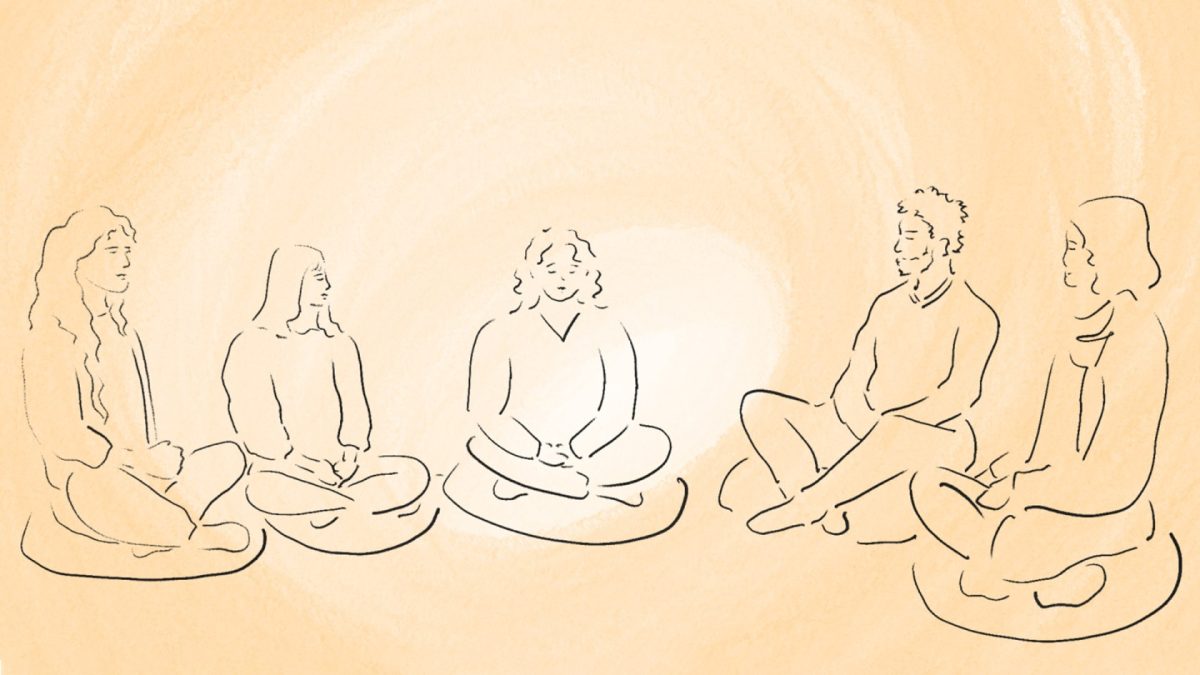
Illustrations by Liz Zonarich/Harvard Staff
Where do science and ancient wisdom align? Take our quiz to find out.
Mindfulness has gone mainstream, with the top 10 smartphone apps for meditation cumulatively reaching some 300 million downloads worldwide. The practice, research suggests, reduces stress and anxiety and improves mood and emotional regulation.
Advanced meditation may offer even greater benefits — potentially leading to transcendent states of mind and awareness, according to scientists at the Massachusetts General Hospital Meditation Research Program who are pioneering studies in the field.
Matthew Sacchet, the program’s director and an associate professor in the Harvard Medical School Department of Psychiatry, helped us develop the following quiz on what scientists are only beginning to learn about these deeper practices.
1. What percentage of Americans say they meditate at least a few times a month?
2. What proportion of people — meditators or not — report experiencing altered states of consciousness like out-of-body experiences or changes in perceived size?
3. True or False: Meditation is unique to the Buddhist tradition.
4. The earliest reference to nirodha samāpatti, a cessation of feeling and perception that can happen in very deep meditation, took place at least how long ago?
5. What happens in the brains of meditators entering the advanced meditative state of extended cessation?
6. What kinds of experiences can arise in advanced meditation?
7. The ultimate goal of meditative and religious practice has been described in some contemplative traditions as enlightenment, nirvana, or salvation. What term is now being used in scientific literature to describe this class of outcomes?
Mindfulness has gone mainstream, with the top 10 smartphone apps for meditation cumulatively reaching some 300 million downloads worldwide. The practice, research suggests, reduces stress and anxiety and improves mood and emotional regulation.
Advanced meditation may offer even greater benefits — potentially leading to transcendent states of mind and awareness, according to scientists at the Massachusetts General Hospital Meditation Research Program who are pioneering studies in the field.
Matthew Sacchet, the program’s director and an associate professor in the Harvard Medical School Department of Psychiatry, helped us develop the following quiz on what scientists are only beginning to learn about these deeper practices.
1. What percentage of Americans say they meditate at least a few times a month?
2. What proportion of people — meditators or not — report experiencing altered states of consciousness like out-of-body experiences or changes in perceived size?
5. What happens in the brains of meditators entering the advanced meditative state of extended cessation?
7. The ultimate goal of meditative and religious practice has been described in some contemplative traditions as enlightenment, nirvana, or salvation. What term is now being used in scientific literature to describe this class of outcomes?